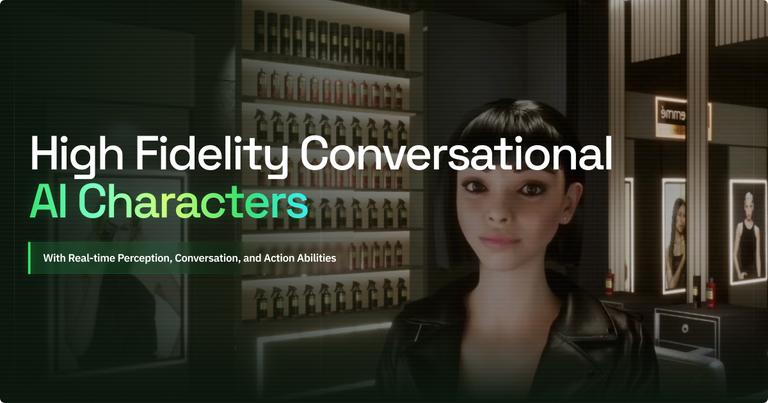
Conversational AI platform for creating and deploying 3D AI characters with multimodal perception for games, metaverse, XR, and virtual worlds.
Features
- Multimodal Perception & Spatial Intelligence — AI characters can see, hear, and understand their 3D environment, enabling context-aware responses with dialogue, gestures, and actions. This spatial awareness is key for creating truly embodied and interactive virtual beings.
- No-Code Creation for Creators — An intuitive, browser-based platform allows creators to design and deploy high-quality 3D AI characters without coding, making advanced conversational AI accessible to artists, designers, and storytellers.
- Seamless Game Engine Integration — Provides robust plugins and APIs for popular engines like Unity, Unreal Engine, and 3JS, along with extensive documentation and support, enabling developers to easily embed AI characters into games, XR, and metaverse projects.
- Real-Time Role-Play & Interaction — Characters engage in dynamic, real-time conversations and role-play scenarios, powered by advanced language models, allowing for natural and immersive user interactions in virtual worlds.
- Customizable Character Mind & Avatar — A structured workflow lets users craft a character's personality and knowledge base, embody it within a 3D avatar, and deploy it into custom environments, offering full control over the AI's behavior and appearance.
- Cross-Platform Deployment for XR & Metaverse — Designed specifically for virtual worlds, the platform supports deployment across various XR and metaverse applications, ensuring consistent performance and interaction quality in immersive settings.
Use Cases
Interactive Brand Marketing & Virtual Ambassadors
Create AI-powered brand mascots or virtual influencers that can engage customers in real-time conversations within virtual showrooms, social media metaverse spaces, or branded games, providing personalized product information and enhancing brand experience. Target Audience: Marketing teams, brand managers, and digital agencies looking to innovate in customer engagement and virtual presence.
Immersive Corporate & Educational Training Simulations
Develop realistic training scenarios where AI characters act as instructors, colleagues, or clients. Trainees can practice soft skills, safety procedures, or customer service in a risk-free, interactive 3D environment with responsive AI feedback. Target Audience: Corporate trainers, HR departments, educational institutions, and simulation developers focused on experiential learning.
Social Virtual Worlds & Gaming NPCs
Populate metaverse platforms and multiplayer games with intelligent, conversational non-player characters (NPCs) that can hold dynamic dialogues, offer quests, and react to player actions, greatly enhancing world immersion and replayability. Target Audience: Game developers, metaverse platform creators, and social VR experience designers.
XR Therapy & Coaching Applications
Utilize AI characters as virtual therapists, coaches, or guides in extended reality (XR) applications for mental health support, public speaking practice, or skill development, providing accessible and consistent interaction. Target Audience: Healthcare innovators, therapists, coaches, and developers building therapeutic or coaching XR applications.
Pros
- Specialized for 3D and XR environments, offering deep spatial intelligence and multimodal perception that general chatbots lack.
- Lowers the barrier to entry with a no-code platform for creators, while providing powerful tools and support for developers.
- Enables highly immersive and interactive experiences by combining natural language dialogue with realistic character actions and gestures.
- Strong focus on integration with major game engines (Unity, Unreal) streamlines the development pipeline for interactive media.
- Rated #1 by developers, indicating a strong reputation for reliability, support, and quality within its niche.
Cons
- Primarily focused on 3D/XR use cases, which may not be cost-effective for simple 2D or text-based chatbot needs.
- Performance and quality of real-time interactions may be heavily dependent on the user's hardware and network capabilities.
- Creating truly sophisticated and nuanced character behaviors might still require significant creative input and testing beyond the no-code tools.
- As a specialized platform, it may have a steeper learning curve for users completely unfamiliar with 3D development or game engines.