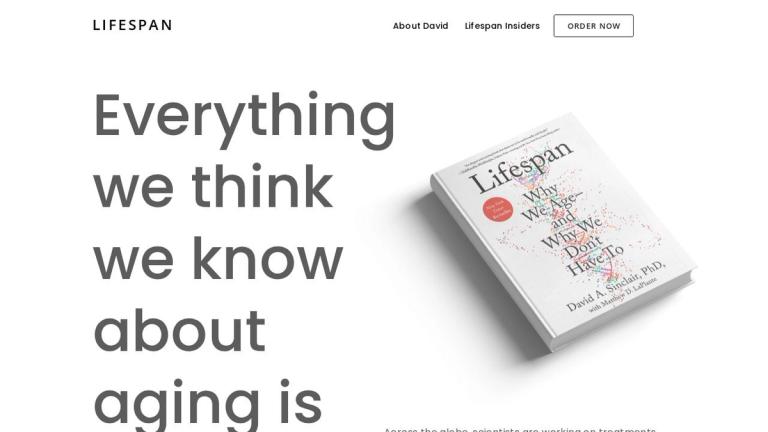
Lifespan: Why We Age—and Why We Don't Have To
Lifespan is a revolutionary science book written by Dr. David Sinclair, a renowned Harvard Medical School professor and leading researcher in the field of aging. The book challenges conventional wisdom about aging by proposing the Information Theory of Aging — a radical new framework suggesting that aging is primarily caused by epigenetic changes rather than genetic mutations.
Core Thesis
Dr. Sinclair argues that while our cells undergo significant changes as they age — becoming larger, less capable of reproduction, and losing their cellular identity — the original genetic code remains intact. The nine commonly cited "hallmarks of aging" are presented not as causes but as symptoms of underlying epigenetic information loss.
Key Insights
The book explores cutting-edge scientific research on:
- How cellular aging occurs at the molecular level
- The role of sirtuins, NAD+, and other biological mechanisms
- Practical interventions and lifestyle changes that may extend healthy lifespan
- The future of longevity medicine and anti-aging therapies
Critical Acclaim
Lifespan has received endorsements from prominent figures including Leroy Hood (Caltech), Siddhartha Mukherjee (Pulitzer Prize winner), Salman Khan (Khan Academy), and Peter Diamandis, among others, who praise its paradigm-shifting perspective on aging science.
Target Audience
Science enthusiasts, health-conscious individuals, researchers interested in aging biology, general readers curious about longevity science, medical professionals, and anyone interested in the future of human healthspan
Key Features
- Information Theory of Aging framework
- Scientific exploration of epigenetic changes
- Practical longevity interventions and lifestyle recommendations
- Cutting-edge aging research insights
- Accessible explanation of complex biological mechanisms
- Vision for future anti-aging therapies
- Accompanying PDF resources available
Use Cases
- Understanding the science of aging and longevity
- Learning about epigenetic research and cellular biology
- Exploring practical strategies for extending healthy lifespan
- Academic research on aging mechanisms
- Personal health and wellness education
- Science communication and public education
Pros
- Paradigm-shifting scientific perspective from a leading researcher
- Backed by endorsements from prominent scientists and thought leaders
- Makes complex biology accessible to general readers
- Offers hope and actionable insights about longevity
- Comprehensive coverage of aging science
Cons
- Some scientific claims may be considered speculative by mainstream science
- Primarily focused on one theoretical framework
- May oversimplify complex biological processes for general audience
Pricing
Available for purchase through major booksellers; pricing varies by format (hardcover, paperback, ebook, audiobook)