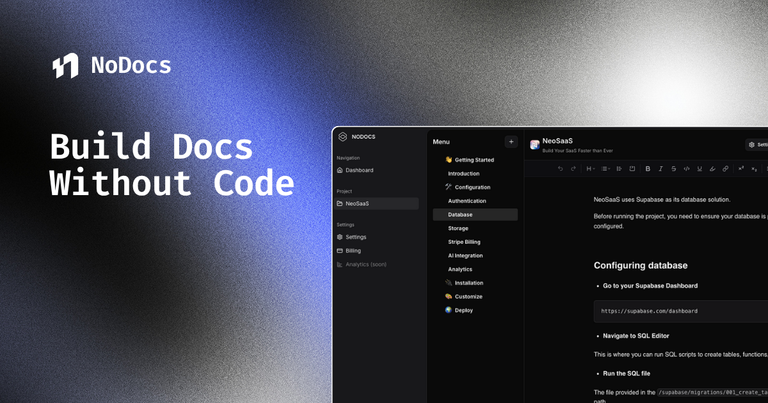
NoDocs is a no-code documentation builder that allows users to create beautiful and functional documentation without writing any code.
Features
- No-Code Documentation Builder — Create complete, professional documentation without writing a single line of code. The intuitive interface empowers non-technical users to build and maintain docs independently, eliminating the need for developer involvement.
- Notion-Like Block Editor — A clean, familiar editing experience inspired by Notion's popular block-based interface. Users can easily add text, images, code blocks, and other content types using a drag-and-drop system that feels natural and requires zero learning curve.
- Multi-Page Project Organization — Structure documentation across multiple pages within organized projects. This hierarchical approach allows teams to create comprehensive, well-organized doc sites with logical navigation for complex products or services.
- One-Click Publishing — Go live instantly with a single click—no deployment pipelines, hosting configurations, or technical setup required. Documentation is immediately accessible online the moment you're ready to share it.
- Custom Domain & White-Label Branding — Use your own domain name for a fully branded documentation experience. Paid plans include white-label branding options that remove NoDocs branding, allowing businesses to maintain consistent brand identity across all customer touchpoints.
- AI-Powered Writing Assistance — Upcoming AI autocomplete and smart suggestions will help users write better documentation faster. This AI-native feature will provide intelligent content recommendations while writing, streamlining the documentation creation process.
Use Cases
Indie Hackers & Solo Makers Launching Products
Solo founders and indie hackers who need quick, professional documentation for their SaaS products, APIs, or digital tools without diverting development resources. NoDocs lets them create polished docs in minutes, helping them ship faster and look credible from day one. Target Audience: Independent developers, solopreneurs, and bootstrapped startup founders
Small Teams Building Product Documentation
Small teams and startups that need collaborative documentation for their products but lack dedicated technical writers. The Notion-like interface allows product managers, designers, and marketers to contribute to documentation without engineering support. Target Audience: Startup teams, small businesses, and cross-functional product teams
SaaS Companies Creating Customer-Facing Help Centers
SaaS businesses that need branded, searchable documentation portals for their customers. With custom domain support and white-label branding, companies can create help centers that seamlessly integrate with their existing brand experience. Target Audience: SaaS companies, B2B software providers, and customer success teams
Freelancers & Agencies Delivering Client Projects
Freelancers and agencies who need to deliver documentation alongside client projects. The quick setup and professional output allow them to add documentation as a value-added service without significant time investment. Target Audience: Freelance developers, digital agencies, and consultants
Pros
- Zero learning curve with familiar Notion-like interface that most users already know how to use
- Extremely fast time-to-publish—documentation can be created and live within minutes, not days
- Affordable pricing tiers including a functional free plan for trying out the platform
- Custom domain and white-label branding options on paid plans for professional, branded documentation
- No technical skills required—empowers non-developers to own and maintain documentation independently
Cons
- AI-powered features are still in development and not yet available, limiting current smart writing capabilities
- Free plan is restricted to a single project with only 5 pages and includes NoDocs branding
- May lack advanced features like version control, API reference generation, or localization that enterprise teams require
- Relatively new platform with a smaller ecosystem compared to established documentation tools like GitBook or ReadMe