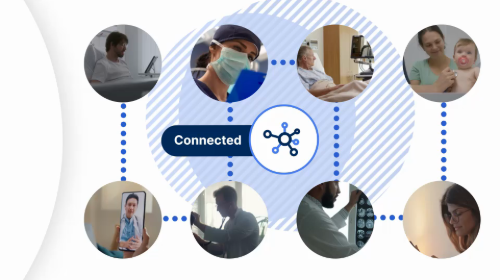
Amwell's platform offers technology-enabled care solutions for providers and payers, improving access to healthcare programs.
Features
- The Amwell Platform — A future-ready, unified technology platform that converges technologies, services, and devices to enable care delivery at scale, anytime and any place. The platform supports in-person, virtual, and automated care delivery across the healthcare continuum.
- Virtual Primary Care — A longitudinal virtual primary care experience that addresses whole-member care by integrating behavioral health and digital/automated care programs into one seamless care journey, improving access for members who may wait weeks for in-person appointments.
- Automated Care Programs — Digital care programs that improve patient transitions, enhance engagement after ED visits, and deliver measurable clinical and operational value through monitoring, alerts, and automation to close care gaps and reduce readmissions.
- Virtual Nursing Solutions — Transforms existing technologies, operations, and workflows to enhance support for nurses, helping alleviate clinician burnout while maintaining high-quality care delivery standards.
- EHR Integration & Interoperability — Deep integration capabilities with major Electronic Health Record systems including Epic and Oracle Cerner, enabling seamless workflow adoption and driving high provider satisfaction rates of 90% or more.
- Amwell Medical Group — Access to approximately 2,200 active providers delivering high-quality virtual care to millions of members nationwide with expert clinicians, nationwide reach, and zero compromise on care quality.
Use Cases
Health Plan Digital Care Strategy
Health plans leverage Amwell to provide approximately 90 million members with covered virtual care benefits, expanding access to primary care, behavioral health, and specialty consultations while reducing costs and improving member satisfaction and retention. Target Audience: Health insurance companies and managed care organizations seeking to enhance their digital care offerings and reduce healthcare costs
Hospital System Workflow Optimization
Health systems integrate Amwell's platform with their existing EHR systems to streamline digital care workflows, as demonstrated by M Health Fairview which drove 2,100+ providers to adopt the technology with a 90% satisfaction rate, and Corewell Health which saved over $1 million in emergency room revisits. Target Audience: Hospital systems and healthcare organizations looking to optimize clinical workflows and reduce operational costs
Government & Military Healthcare
Government agencies like the Defense Health Agency use Amwell to pioneer telehealth transitions, enabling comprehensive rollout of virtual care services across military medical facilities to improve healthcare access for service members and their families. Target Audience: Government healthcare agencies and military medical facilities requiring scalable virtual care solutions
Behavioral Health Access
Healthcare organizations deploy Amwell's virtual therapy capabilities to extend mental health assessments and treatment to patients seeking behavioral healthcare, including those in emergency departments, with easy phone-based access requiring no app downloads. Target Audience: Healthcare providers and payers addressing the growing demand for accessible mental health and behavioral health services
Pros
- Proven scale and market presence with approximately 90 million members having Amwell as a covered benefit and over 37.6 million virtual care visits completed since inception
- Demonstrated ROI with real client results including Corewell Health saving over $1 million in emergency room revisits and M Health Fairview achieving 90% provider satisfaction
- Seamless EHR integration with major systems like Epic and Oracle Cerner, reducing implementation friction and driving rapid provider adoption
- Comprehensive care continuum spanning virtual primary care, behavioral health, specialty consults, automated care programs, and virtual nursing in a single platform
- Established company with nearly two decades of experience since 2006, trusted by major health systems, payers, and government agencies worldwide
Cons
- Enterprise-focused platform may not be directly accessible to individual consumers or small practices without organizational partnerships
- Implementation complexity may require significant organizational change management and workflow redesign for full platform adoption
- Heavy reliance on technology infrastructure and internet connectivity may limit accessibility for underserved populations with poor digital access
- Pricing and contract structures are not publicly transparent, requiring direct sales engagement which may slow evaluation processes for potential clients